
I'm Jon from Deadset Pest Management in Logan. When people ask me how often termite inspection visits should happen, the real answer depends on the house, the yard and its history. Here's how to work out the right timing for yours.
The short answer
For most homes in South East Queensland, book an annual termite inspection. AS 3660.2 treats regular inspections as part of ongoing termite management and says they shouldn't be more than 12 months apart. Where termites are being actively controlled, follow up inspections are generally closer together, often no more than six months apart, according to the Australian Environmental Pest Managers Association's notes on the standard.
Twelve months is the upper limit, not a target. Some homes need checking every six months, and I'll tell you if I think yours is one of them.
Why South East Queensland is high risk
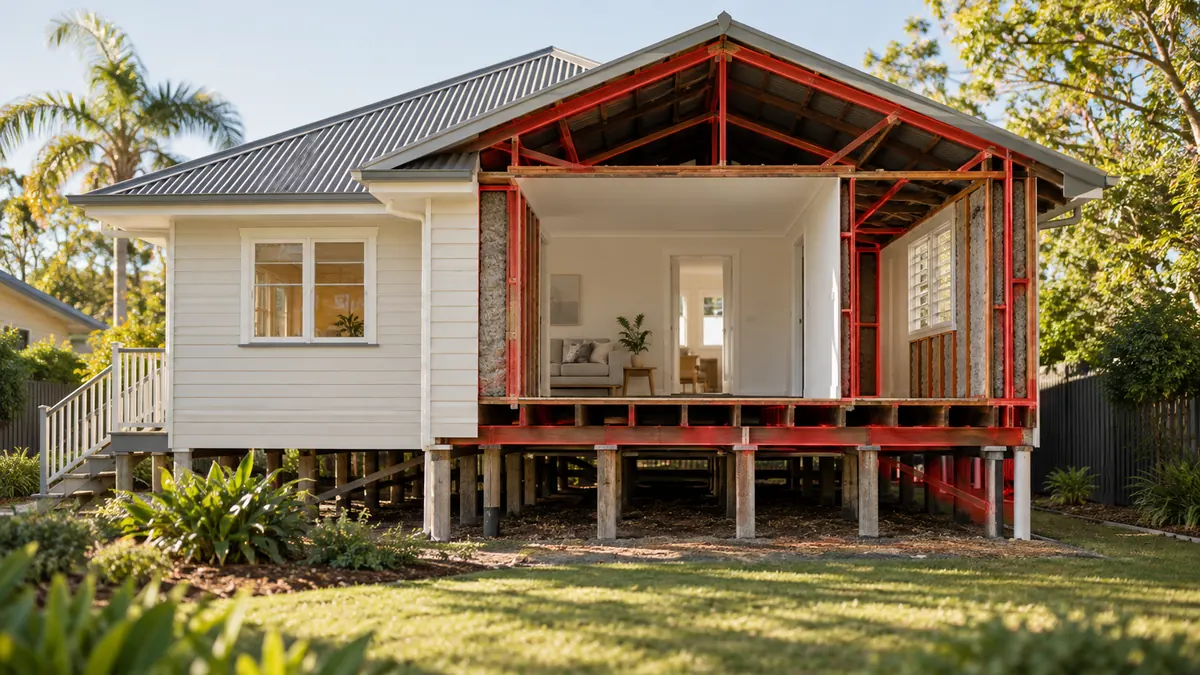
Subterranean termites need warmth and moisture, and our summers give them plenty of both. Logan, Brisbane's southside and the Scenic Rim fringe also have a lot of established gums, old stumps and bushland on the edge of new estates, which are natural nesting spots.
The Queensland Government notes that subterranean termites build enclosed mud galleries to get above ground into houses, and that drywood termites, including the West Indian drywood termite, are found throughout Queensland. A year is a long time for an active colony working quietly inside a wall.
Wet seasons and storms
After heavy rain or flooding, soil stays damp for weeks and termite activity can pick up. The QBCC has warned that wet weather can bring on termite problems and suggests checking your termite management system after flooding. If your yard went under water or you've had roof or plumbing leaks, don't wait for the usual 12 month mark.
Homes that need more frequent checks
AS 3660 allows for more frequent inspections in high risk situations. These are the homes to watch:
- Homes with a history of termite activity on the property, or a neighbour who's had them
- Older timber homes, Queenslanders and lowsets on stumps
- Houses with gardens, mulch or paving built up against the slab edge or covering weep holes
- Properties backing onto bushland, creeks or acreage with big trees and stumps
- Homes with ongoing moisture problems, like leaking showers, hot water overflow or poor drainage
- Houses where a termite management system is in place but hasn't been inspected for a while
If two or three of these apply to you, six monthly inspections are worth talking about. I'll give you a straight answer after I've seen the property.
What an annual termite inspection covers
A proper termite inspection in Queensland is more than a walk around the outside. On every termite inspection I check:
- Interior rooms, including skirting boards, door and window frames, wet areas and built in cupboards
- The roof void, where there's safe access
- The subfloor, where there's safe access
- The outside of the house, including slab edges, weep holes, piers and external timber
- The yard, including trees, stumps, retaining walls, fences, sheds, timber stacks and garden edges
- Conditions that attract termites, such as moisture, poor drainage and timber touching the soil
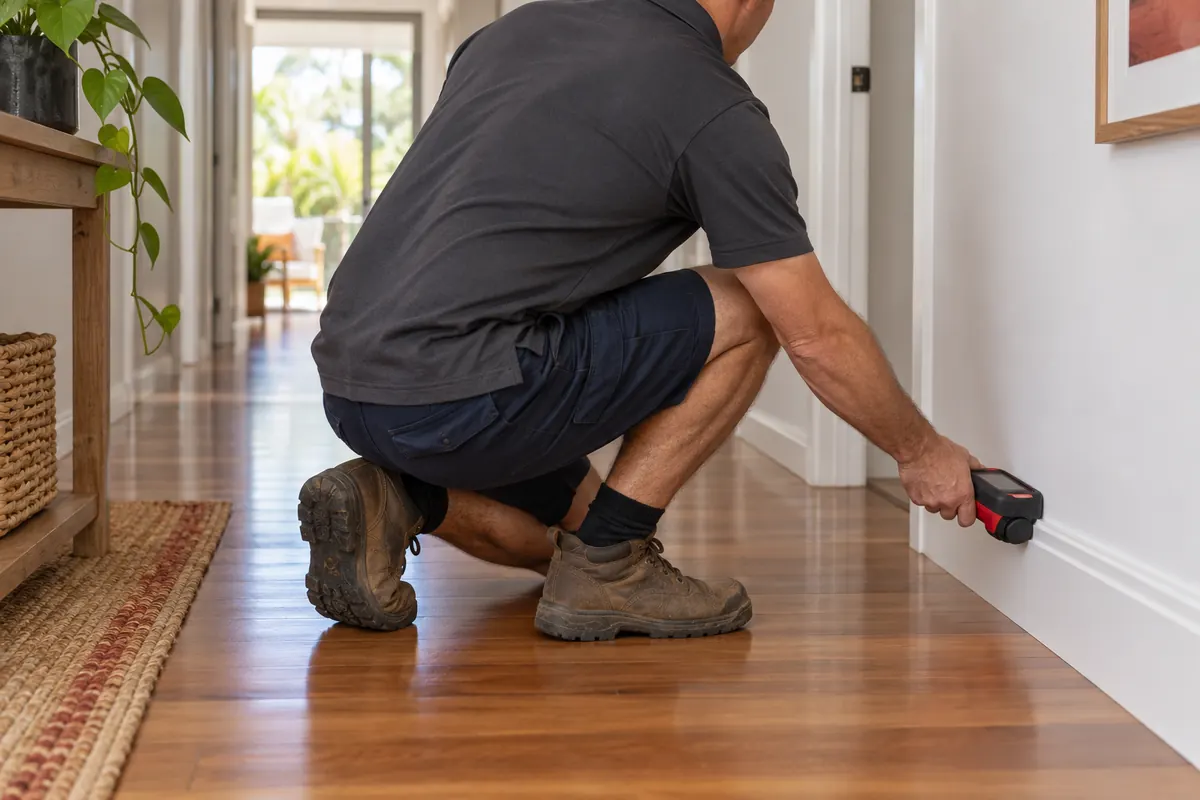
I use a Termatrac iTracker, which uses radar to detect termite movement through and behind walls, ceilings and roof areas without drilling or cutting. Tapping and probing suspect timber often comes next.
After the inspection, I'll explain what I found, show you any problem areas and tell you what can be fixed by you and what needs treatment. Small changes, like pulling mulch back from the slab edge, make a real difference and usually only take an afternoon.
What an inspection can't see
No inspection can see inside every wall or under every floor covering. Areas blocked by furniture, stored boxes, insulation, or sealed cavities limit what can be checked, which is why access matters. Keep the manhole clear and the slab edge visible before I arrive.
Inspection reports and your warranty
If your home has a termite management system, such as a chemical treatment zone or a physical system installed when the house was built, the warranty usually depends on regular inspections. The QBCC advisory notes for builders and homeowners explain that a termite management system is meant to reduce the risk of concealed entry, and that it won't stop termites being active on the site. Inspections are how hidden entry gets caught.
Check the durable notice in your meter box. It lists the type of system installed, when it was installed and what inspections are recommended. Keep every inspection report in one place. If you sell, or need to make a warranty claim, that paper trail matters.
A quick note for buyers: I don't do pre-purchase timber pest reports. If you're buying and just want to know whether there's termite activity, you can book a standard termite inspection with me. For a formal pre-purchase report, you'll need a building and pest inspector.
What affects the cost
A lot of people search for "termite inspection cost" or "how much is a termite inspection" before booking. I don't publish set prices because every property is different, and the price depends on a few things:
- The size of the home and the number of levels
- Construction type, such as slab on ground, highset, lowset or a Queenslander on stumps
- How easy the roof void and subfloor are to get into
- The size of the yard and the number of trees, stumps, sheds and outbuildings
- Whether you want a one off inspection or a regular schedule
Tell me about your home and I'll give you a fixed quote before I arrive, so there are no surprises. My pest control cost guide explains these factors in more detail.
Summary: how often termite inspection should happen
- Book an inspection at least every 12 months. That's the upper limit under AS 3660, not a goal.
- Go to every six months if your home is high risk, has had termites, or is under active termite control.
- Check sooner after floods, long wet spells or any sign of activity.
- Keep the durable notice and inspection reports. Most system warranties rely on them.
So how often termite inspection visits should happen comes down to your risk. Once a year is the minimum for South East Queensland homes. Book an inspection or call 0412 205 586 and I'll tell you what suits your property.
Frequently asked questions
How often should you get a termite inspection in Queensland?
At least every 12 months, as recommended by AS 3660 and the QBCC. High risk homes, or homes with past termite activity, may need an inspection every six months.
Is an annual termite inspection really necessary?
For most South East Queensland homes, yes. Termites work out of sight, and a year is plenty of time for a colony to cause damage. An annual inspection also keeps most termite system warranties in order.
How much is a termite inspection?
It depends on the size and layout of the home, access to the roof void and subfloor, and the size of the yard. I don't publish prices, but I'll give you a fixed quote before the inspection.
What affects termite inspection cost?
House size, construction type, access, the number of outbuildings and the number of trees and stumps in the yard. A one storey home on a small block takes less time than a highset Queenslander on acreage.
Do new homes need termite inspections?
Yes. Most new homes in Queensland are built with a termite management system, but no system stops termites completely. Regular inspections are part of how that system is meant to work.
Can I do my own termite inspection?
You can check for obvious signs, like mud leads and hollow timber, and that's worth doing. It doesn't replace a professional inspection, which covers the roof void, subfloor and hidden areas with proper equipment. My guide to the signs of termites shows what to look for.
Does a termite inspection include the yard?
Mine does. I check trees, stumps, fences, retaining walls, sheds and garden edges, because the nest is often outside the house.
Will my termite warranty be void if I skip inspections?
Many termite system warranties require regular inspections, often every 12 months or less. Check the terms of your system and the durable notice in your meter box.
Is a termite inspection the same as a pre-purchase pest report?
No. I do standard termite inspections, not pre-purchase timber pest reports. Buyers needing a formal pre-purchase report should use a building and pest inspector.
How do I book a termite inspection with Deadset?
Book online or call me on 0412 205 586. If it's after hours, send a text with the best time to call you back.