
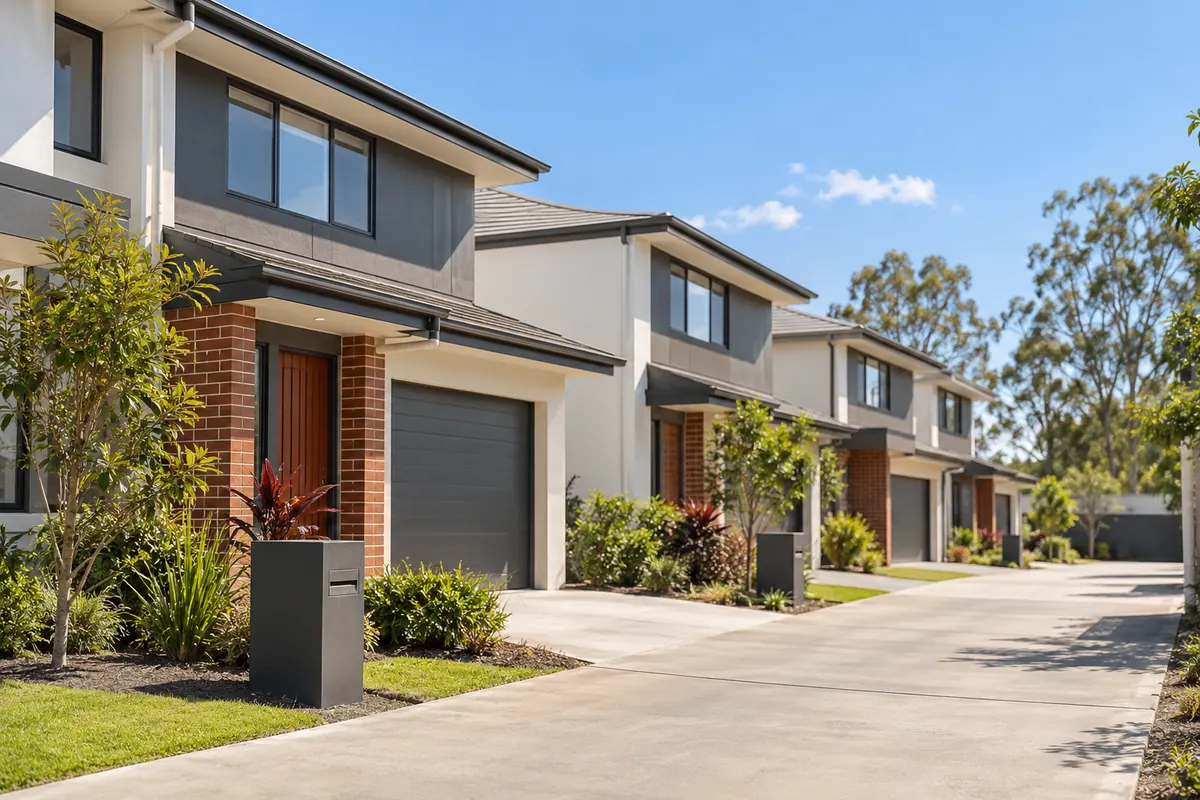
Common areas and individual units
In Queensland, the body corporate is generally responsible for pest inspection, prevention and treatment on common property, while each lot owner looks after the inside of their own lot. The Queensland Government's body corporate maintenance page sets this out. Your by-laws and plan type can change the detail, so check with your body corporate manager if you're unsure.
In practice, that splits the work like this.
Common area pest control
Common area pest control is the outside and shared spaces. Gardens, driveways, bin enclosures, letterbox banks, stairwells, car parks, pool fences and any shared laundry or storage rooms. These are where ants trail along paths, spiders build up under eaves and rats move between bins and gardens.
Treating common areas on a regular schedule keeps the pressure down for everyone. It also stops the frustrating cycle where one unit gets treated, the pests move next door, and the complaints start again.
Inside individual units and townhouses
Inside a lot, the owner (or tenant, depending on the lease) usually organises and pays for treatment. Many complexes find it easier to offer a group booking, where I treat every unit that opts in on the same day while I'm already on site for the common areas.
That approach works well for unit complex pest control because cockroaches in shared walls and roof spaces don't respect boundaries. When most units are treated together, the result lasts longer. Owners who opt in pay for their own lot.
Termite inspections for complexes
For most complexes, termites are the risk that can cost the most, especially townhouses with timber frames, fences and landscaping sleepers against the buildings. Australian Standard AS 3660 recommends termite inspections at least every 12 months, and more often in high risk areas. A lot of South East Queensland fits that description.
For a complex, I inspect the buildings, fences, retaining walls, trees and garden edges on common property, and the accessible parts of each building. I use a Termatrac iTracker, a radar unit that picks up termite movement behind walls, ceilings and roof areas without drilling or cutting. That's useful when you're inspecting dozens of walls in a row and can't open any of them.
You can read how a standard inspection works on my termite inspections page. For complexes, the main difference is the report, which is set out by building or lot so the committee can see where any risk sits.
Scheduling and notices
Getting into units is usually the hardest part of strata pest control in Brisbane and Logan, so it pays to plan it. Once the committee or manager approves the work, I'll set a date with you and give you the details for the notice to residents: when I'm coming, which areas I'll treat, roughly how long each unit takes and what people need to do beforehand.
For tenanted units, the property manager will need to give their tenants proper notice of entry. The Residential Tenancies Authority's entry rules cover the notice periods. If a tenancy is ending, my end of lease pest control page covers vacate treatments.
On the day, residents generally need to clear cupboards under sinks, keep pets inside or away from treated areas, and stay off freshly sprayed paths until they're dry. I'll include that list in the notice so nobody's caught out.
Size usually isn't a problem. Most multi-storey unit blocks and townhouse complexes can be done comfortably in a single day, so residents only have one day of disruption.
Reports for committees and managers
Body corporate managers need paperwork, and committees need something they can table at a meeting. After each visit I provide a written report listing what was inspected, what was found, what was treated and any maintenance the body corporate should look at, like a leaking tap feeding termites near a wall or a gap under a bin room door.
Termite inspection reports note conducive conditions and areas I couldn't access. That second part matters. If a unit was locked or a roof void was blocked, the report says so, and you know what still needs checking.
If your complex includes shops or a cafe on the ground floor, those tenancies usually need their own program. My commercial pest control page explains how that works.
Body corporate questions
Who pays for pest control in a body corporate?
Generally, the body corporate pays for pest work on common property and each lot owner pays for treatment inside their lot. By-laws and the type of plan can change that, so confirm with your body corporate manager. I can quote common areas and individual units separately to keep it clear.
How often should a complex have pest control?
Common areas usually suit a regular general pest treatment at least once a year, with termite inspections at least every 12 months in line with AS 3660. Complexes near bushland or with lots of timber landscaping may need termite inspections more often. I'll recommend a schedule after the first visit.
Do you do townhouse pest control in Logan?
Yes. Townhouse pest control in Logan is a large part of this work, and I'm based in Hillcrest, so complexes in Springwood, Browns Plains, Loganholme, Shailer Park and nearby are close by.
Can you treat every unit on the same day?
For most complexes, yes, provided access is arranged and residents know what to do beforehand. Larger sites may be split over more than one day.
What if some owners don't want their unit treated?
That's their choice for their own lot. Common areas still get treated. It's worth explaining to owners that pests like cockroaches move through shared walls, so opting in helps everyone.
Do you handle strata pest control in Brisbane as well as Logan?
Yes. I service complexes on Brisbane's southside as well as across Logan, Beenleigh and Redland Bay. Strata pest control in Brisbane runs the same way: common areas, termite inspections and optional unit treatments, with a report after each visit.
Will the committee get a written report?
Yes. You get a written report after each visit, and termite inspection reports are set out so you can see where any issues are.
How much does body corporate pest control cost?
I don't publish prices. The cost depends on the number of buildings and lots, the size of the common areas, whether termite inspections are included and how often I visit. Call me on 0412 205 586 and I'll arrange a site visit, then give you a fixed quote you can take to the committee.
Request a body corporate quote
If you're a committee member or body corporate manager looking for body corporate pest control in Logan or Brisbane, tell me about the complex: how many lots, the type of buildings and what's been going on. I'll come out, walk the site and send a fixed quote for common areas, termite inspections and optional unit treatments.
Request a body corporate quote online, or call me on 0412 205 586. If I'm on a job, text me the best time to call back.