
I'm Jon from Deadset Pest Management, and I handle rodent control around Logan and Brisbane's southside. Here is how I'd work out how to get rid of rats in the roof, and what I'd tell a friend to try before they ring anyone.
Signs it is rats, not possums
First work out what's up there, because the two are handled very differently. Rats are pests you can trap and bait. Possums are native animals protected under Queensland's Nature Conservation Act, and the Queensland Government says trapping possums is illegal unless you have a permit.
- Rats make light, quick scratching and gnawing sounds through the night.
- Possums are much heavier. Think thumping or something "walking" across the ceiling, mostly around dusk and again before dawn.
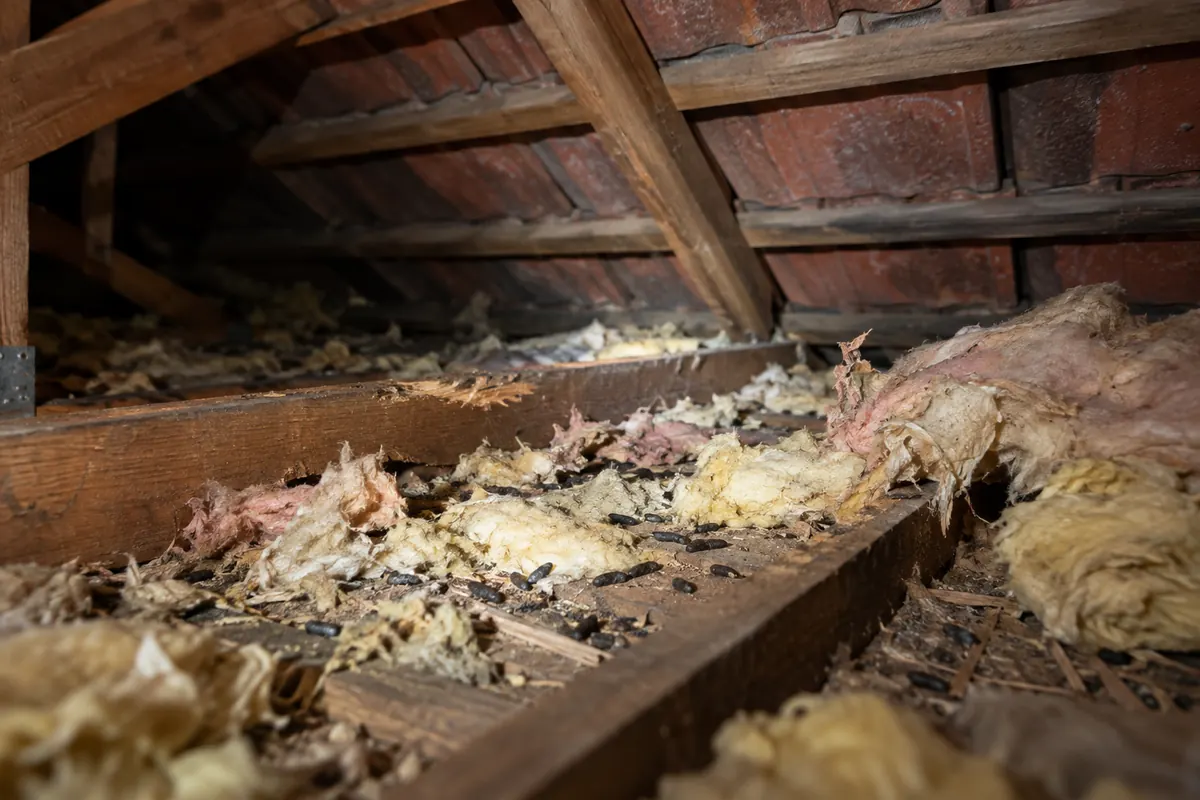
- Rat droppings are small, dark and pointed at the ends. Possum droppings are noticeably larger.
- Rats leave greasy rub marks along beams and around holes they use often.
If the signs point to a possum, don't trap it or bait the roof. The Queensland Government's guide suggests sealing the entry at night while the possum is out feeding, and putting a nest box in a nearby tree so it has somewhere else to go. Redland City Council notes that licensed contractors use harmless traps and release the possum up to 25 metres away. Anything more is a job for a permitted possum catcher.
Rats in the ceiling or the walls?
Rats in the ceiling often travel down wall cavities too. Scratching low in a wall near the kitchen usually means the same rats are moving between the roof and food below.
How rats get into your roof
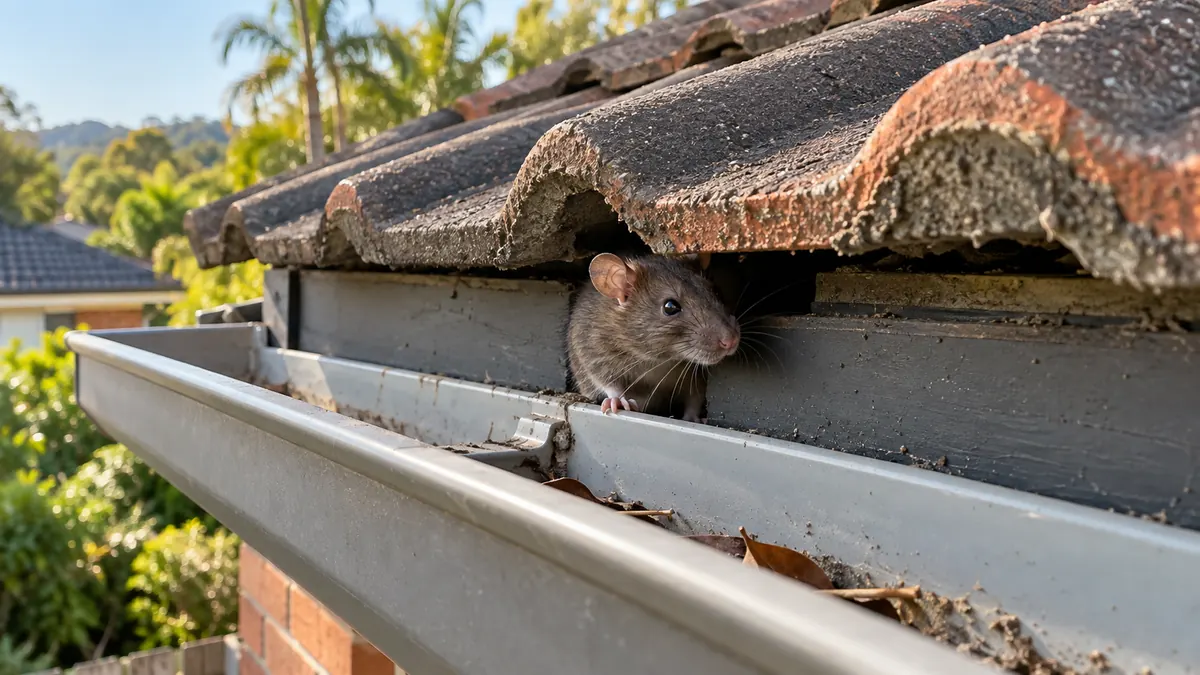
The rat most often found in Queensland roof spaces is the roof rat, also called the black rat. Rockhampton Regional Council describes them as excellent climbers and jumpers that prefer nesting in roof cavities. They'll run along fences, power lines and overhanging branches, then into the roof wherever there is a gap.
The usual entry points I check:
- gaps under roof tiles at the gutter line and around ridge capping
- holes where pipes, cables or air conditioning lines go through walls or eaves
- broken or missing eave sheets and vents
- gaps around garage roller doors and sub floor areas
- tree branches and palms touching or close to the roof
Inside, the roof gives them shelter, warmth and insulation to nest in. What brings them close in the first place is usually food outside: fallen fruit, pet food left out, bird seed, compost and open bins.
Traps, baits and what actually works
How to trap a rat
Snap traps work quickly and leave a body you can remove, which matters in a roof. A few tips:
- Set several traps, not one. Rats are wary of new objects.
- Put them along walls, beams and the runways where you've seen droppings or rub marks, with the trigger end facing the wall.
- Bait with something sticky they have to work at, such as peanut butter.
- Check them every day and wear gloves when you handle a catch.
Glue boards are something I'd avoid. They are cruel, and a stuck rat can drag one somewhere you can't reach.
Baits and safety
Baits work, but a baited rat can die inside a wall and smell for days, and pets or wildlife can be poisoned by the bait or by eating a poisoned rat. ACT Health advises keeping baits where children, pets and wildlife can't reach them, or in lockable bait stations. Always follow the label. If someone swallows bait, call the Poisons Information Centre on 13 11 26.
What I wouldn't rely on: ultrasonic plug in repellers and smells like peppermint oil. Neither removes rats that are already nesting, and neither closes the gap they came in through.
Sealing entry points
Trapping and baiting deal with the rats already inside. Sealing is what stops the next lot. I do it after the activity has dropped, so I'm not locking rats inside the roof.
ACT Health recommends blocking rodent entrances with materials like concrete, hard setting filler, steel wool or heavy gauge sheet metal. Expanding foam on its own gets chewed through.
Trim branches back from the roof as well. A rat that can't get onto the roof can't get into it.
How to get rid of rats in the garden
The garden is where most roof problems start. Pick up fallen fruit, store pet food and bird seed in sealed tubs, use an enclosed compost bin, and keep woodpiles and stacked materials off the ground. ACT Health suggests keeping stacked wood and bricks at least 30 centimetres above the ground.
Health and fire risks
Queensland Health explains that leptospirosis, a bacterial disease, is spread through the urine of infected animals, and that introduced black and brown rats are normal hosts for one of the strains.
When you clean up, wear gloves, avoid sweeping dry droppings, and use a dustpan or shovel for any dead rats. Then wash your hands properly.
The fire risk comes from chewing. Rats gnaw constantly to keep their teeth worn down, and electrical cables in a roof are an easy target. If you find chewed wiring, get a licensed electrician to look at it.
When to call a professional
Call someone if the noise hasn't stopped after a fortnight of trapping, if you can't safely get into the roof, or if you can't tell whether it's rats or a possum.
When I come out for rodent control, I look at where the rats are getting in, where they're nesting, which runways they use, and what food is drawing them to the property. Then I explain what I've found and what I recommend, and I give you a fixed price before any work starts. I'm licensed and insured with QBCC licence 15076438, and I do every job myself.
So, how to get rid of rats in the roof for good? Confirm it's rats, reduce the numbers safely, then block the way in and remove the food outside. If you'd like a hand with any part of that, request a quote or call me on 0412 205 586.
Summary: how to get rid of rats in the roof
- Work out whether it's rats or a possum before doing anything. Possums are protected in Queensland.
- Snap traps along runways are a good first step. Use secured bait stations if you use bait at all.
- Sealing entry points is what stops rats coming back.
- Clean up food sources in the garden.
- Call a professional if activity continues or you can't access the roof safely.
Frequently asked questions
How do I know if I have rats in my ceiling?
Listen for light scratching at night, and look for small dark droppings, gnaw marks and greasy rub marks around holes.
What is the fastest way to get rid of roof rats?
A combination of several snap traps on their runways and secured bait stations, followed by sealing the entry points. There's no instant fix. Expect to see activity drop over one to two weeks if the setup is right.
How do I tell the difference between rats and possums in my roof?
Possums are heavier and sound like thumping or walking, mainly at dusk and before dawn. Rats make lighter, faster scratching and gnawing sounds through the night. Possum droppings are much larger than rat droppings.
Can I trap a possum in my roof myself?
No. Possums are protected in Queensland and trapping them is illegal without a permit. Use a permitted possum catcher, or seal the entry at night when the possum is out and provide a nest box nearby.
How do I get rid of rats in the house as well as the roof?
Treat it as one problem. To get rid of rats in the house, trap along their runways, remove food inside, and seal gaps around pipes and cables where they move between the roof, walls and kitchen.
Are rat baits safe to use around pets?
Baits are a poison, so there's always some risk. Put them in lockable bait stations out of reach of pets and children, follow the label, and remember that a dog can be poisoned by eating a baited rat.
Why can I smell something dead in my ceiling?
A rat that has eaten bait can die inside the roof or a wall. The smell usually fades over a week or two. If you can safely reach it, remove it with gloves and a shovel or dustpan.
What's the best way to get rid of rats that keep coming back?
If they return after trapping, there's an entry point or food source that hasn't been found. Seal with hard materials, not foam, and get the roof line, eaves and garden inspected.