
This article is general information, not legal advice. For your own situation, check with the RTA directly.
I'm Jon from Deadset Pest Management, and I work for property managers, landlords and tenants around Logan and Brisbane's southside. Here's how the RTA answers who is responsible for pest control when renting in QLD.
Who is responsible for pest control when renting in QLD?
The RTA's page on carpet cleaning and pest control says the owner or manager must make sure the property is free of pests when the tenant moves in and during the tenancy, unless the pests are the result of the tenant's actions.
Queensland's minimum housing standards back this up. One of the standards is that a rental must be free from vermin, damp and mould, except where the tenant caused it.
The tenant's side is to keep the place in the same pest free condition it was in at the start, and to report vermin promptly. In the RTA's pest control podcast, it says annual pest control will more than likely fall to the owner as part of general maintenance, unless the issue was caused by the tenant.
Is the tenant responsible for pest control?
Sometimes. A tenant is generally responsible when the infestation comes from how they're living in the property. The RTA's example is food scraps or waste left to build up, which then leads to mice or ants. In that case the tenant is liable for fixing it.
Pests already there when you moved in
Cockroaches, rats or ants in the first days of a tenancy point to a problem that was there before you. Note it on your entry condition report, take photos and tell your property manager in writing straight away. The longer you wait, the harder it is to show you didn't cause it.
If the owner books a treatment while you're living there, the manager gives you notice of entry. The RTA says that for necessary repairs and maintenance the minimum notice is 24 hours.
Pests caused by tenants
Pests that come from rubbish building up or food left out will usually be the tenant's to fix.
Some pests are harder to pin on anyone. Australian cockroaches wander in from gardens, rats travel along fences from the neighbours, and ants turn up after heavy rain. That doesn't automatically make it the tenant's fault. Where it isn't clear, talk to the property manager early and keep it in writing.
Pets and end of lease flea treatments
When an owner approves a pet, they can attach reasonable conditions. The RTA's renting with pets fact sheet says one allowed condition is that the property be professionally fumigated at the end of the tenancy, if the pet can carry parasites that could infest the property. Professional carpet cleaning can also be required if the pet is allowed inside.
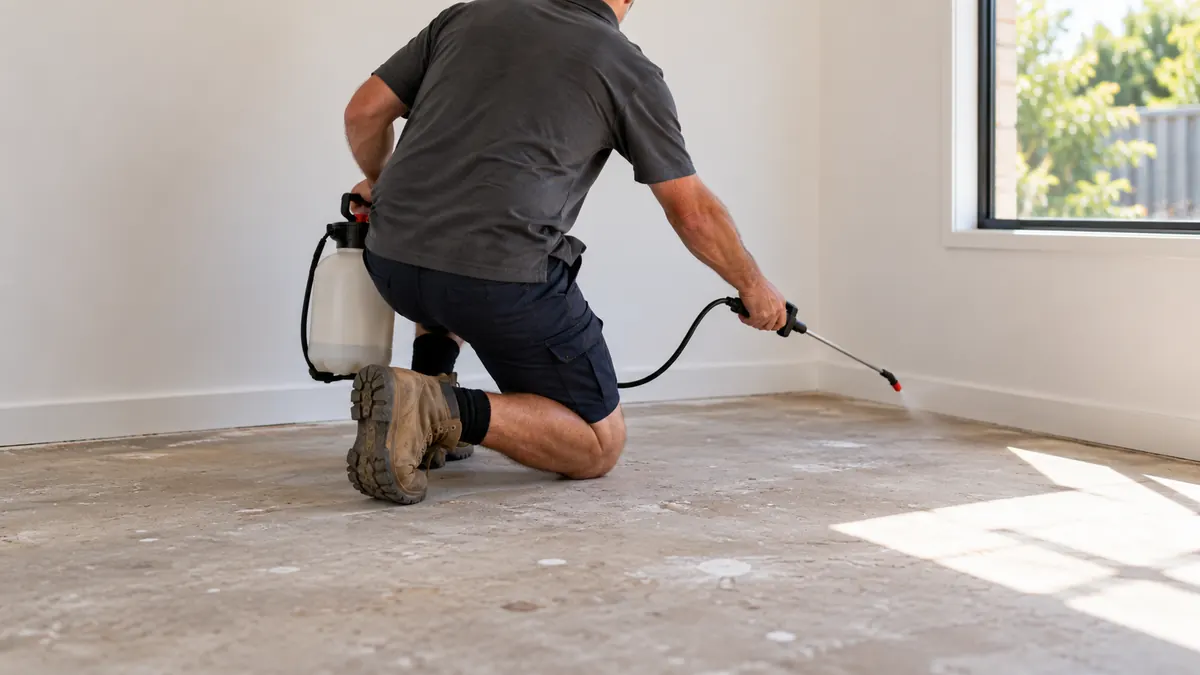
The RTA says that fumigation must be done to a standard ordinarily achieved by businesses selling that service, which usually means commercial equipment and products. A flea bomb from the supermarket is unlikely to meet that standard.
What end of lease pest control usually involves
For a pet condition, an end of lease treatment is mostly about fleas and other parasites. It covers the carpets, floors and the outdoor areas where the pet spent time, and you get an invoice that you can hand to the property manager as proof.
Can the agent tell me which pest controller to use?
No. The RTA says a property manager can't require a tenant to use a specific contractor or company, and can't require a set pest control fee or particular product. They can recommend someone, but you're free to choose your own licensed pest controller. See the RTA's guidance on special terms.
The RTA also says a property manager can't make a tenant leave the property in better condition than it was at the start. If there was no pet condition and no tenant caused infestation, an end of lease pest treatment usually isn't something the tenant has to pay for.
Termites and the landlord
The RTA's pest pages don't single out termites, but the same general rule applies: the property must be free of pests unless the tenant caused them. Termites come from the soil, not from how someone lives in a house, so owners usually arrange termite inspections and treatment. If you're unsure about your case, check your lease and ask the RTA.
If you're renting and see mud tunnels on walls, soft or hollow sounding timber, or winged termites swarming, report it to your property manager in writing straight away. Don't disturb or spray them, because that can push them to another part of the house.
The RTA's podcast also mentions that in severe cases, pest damage can make a property unliveable, which has its own set of rules for ending a tenancy.
What property managers ask for
Real estate pest control usually falls into a few types of job:
- a treatment before a new tenant moves in, so the property starts pest free
- routine general pest control booked by the owner as maintenance
- termite inspections on the owner's schedule
- end of lease treatments for tenants with an approved pet
What property managers almost always want is a clear invoice or receipt with the address, date, the treatment done and the licence details. My paperwork shows my QBCC licence 15076438. I also work with body corporates on common areas in unit and townhouse complexes.
Booking an end of lease treatment
If you're a tenant with a pet condition, book your end of lease pest control after the property is empty and cleaned, but before your final inspection.
Tell me the suburb, the size of the place, the type of pet and whether there's a yard, and I'll give you a fixed price. I do every job myself.
So, who is responsible for pest control when renting in QLD? Generally the owner, unless the tenant caused the problem or agreed to a pet condition that requires a professional treatment at the end. If you need a treatment booked, request a quote or call me on 0412 205 586.
Summary
- Owners must provide a property free of pests at the start and throughout the tenancy, unless the tenant caused them.
- Tenants must keep it in the same condition and report vermin promptly.
- If you approve or have a pet, a professional end of lease fumigation can be a condition when the pet can carry parasites.
- Tenants can choose their own pest controller. Agents can't require a specific company, fee or product.
- Termites usually fall to the owner under the general rule.
Frequently asked questions
Does the landlord have to pay for pest control in Queensland?
Generally, yes. The RTA says the owner or manager must make sure the property is pest free at the start and during the tenancy, unless the tenant caused the pests.
Do I have to do pest control at the end of my lease in QLD?
Only in certain situations. If your pet approval included a condition for professional fumigation at the end of the tenancy, you'll need to arrange it. Otherwise, the RTA says a manager can't require you to leave the property in better condition than at the start.
Can my agent make me use their pest control company?
No. The RTA says a property manager can't require a tenant to use a specific contractor or company for pest control. They can recommend one, but you can choose.
Who pays for flea treatment when I move out with a dog?
If flea or parasite treatment was a condition of your pet approval, the tenant arranges and pays for it. It must be done to a professional standard.
Who pays if there are cockroaches when I move in?
That's generally the owner's responsibility. Note it on your entry condition report, take photos and report it in writing quickly.
What if pests show up halfway through my lease?
Report them to your property manager in writing. Whether it falls to the owner or tenant depends on the cause. Pests from rubbish or food build up are usually the tenant's responsibility.
Who pays for termite treatment in a rental?
Under the RTA's general rule, pests are the owner's responsibility unless the tenant caused them, and termites come from the soil. Tenants should report any signs promptly and not disturb them.
How much notice does a tenant get before pest control?
The RTA says the minimum notice for entry to do necessary repairs and maintenance is 24 hours.
What proof do I need after an end of lease pest treatment?
Keep the invoice or receipt showing the address, date, treatment and the pest controller's licence details.
Is this legal advice?
No. This is general information based on what the RTA publishes. For advice on your own tenancy, contact the RTA.