
I'm Jon, the owner and only technician at Deadset Pest Management in Logan. Here's what I look for, and what to do if you find them.
What termites look like in Queensland
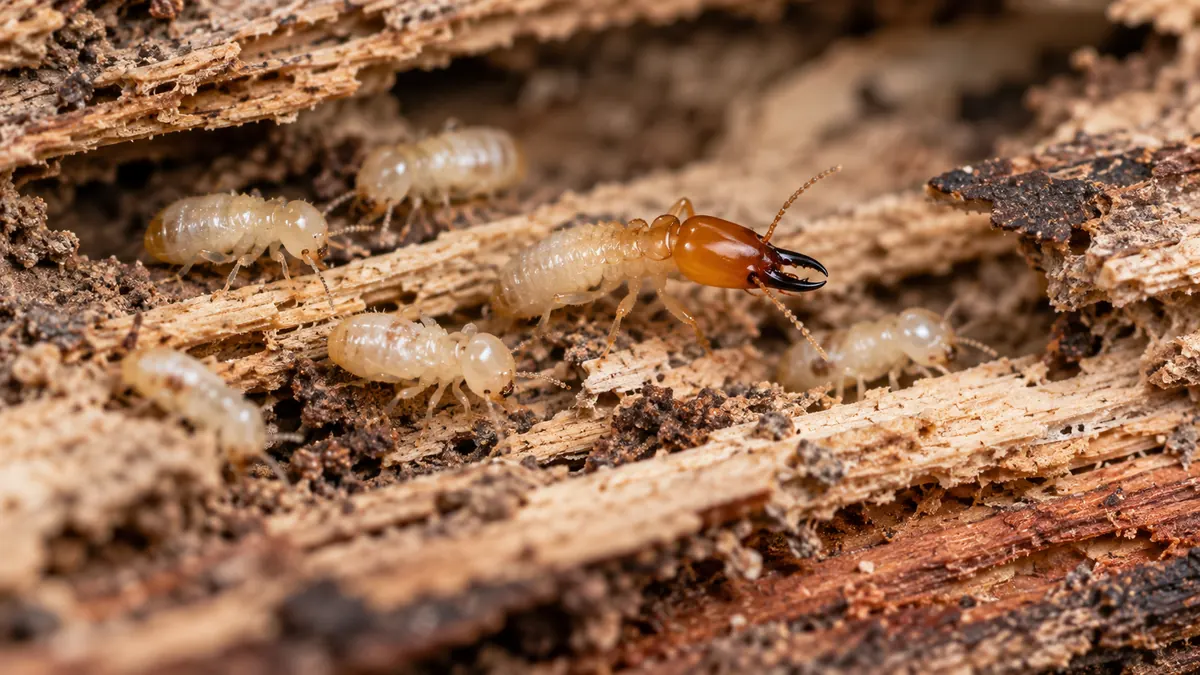
Plenty of Queenslanders still call them white ants, but termites aren't ants at all. The workers that do the damage are small, soft and creamy white to pale brown. The Queensland Government describes subterranean termites as generally 3 to 7 mm long and pale brown or brown.
What does a termite look like compared with an ant?
Ants have a pinched "waist" and elbowed antennae. Termites have a thick body with no narrow waist and short, straight antennae. Soldiers have a darker, harder head.
Flying termites (alates) have two pairs of equal length wings and drop them soon after landing. Piles of discarded wings on a windowsill after a warm, humid evening are worth a photo.
What does a termite nest look like?
Subterranean termites, the type that cause most damage to Queensland homes, nest in the ground, in stumps, or inside living and dead trees. Some build mounds you can see in bushland. The nest attacking a house is usually out of sight, in a tree in your yard or a neighbour's, under a slab, or inside a wall cavity.
Mud leads and tunnels
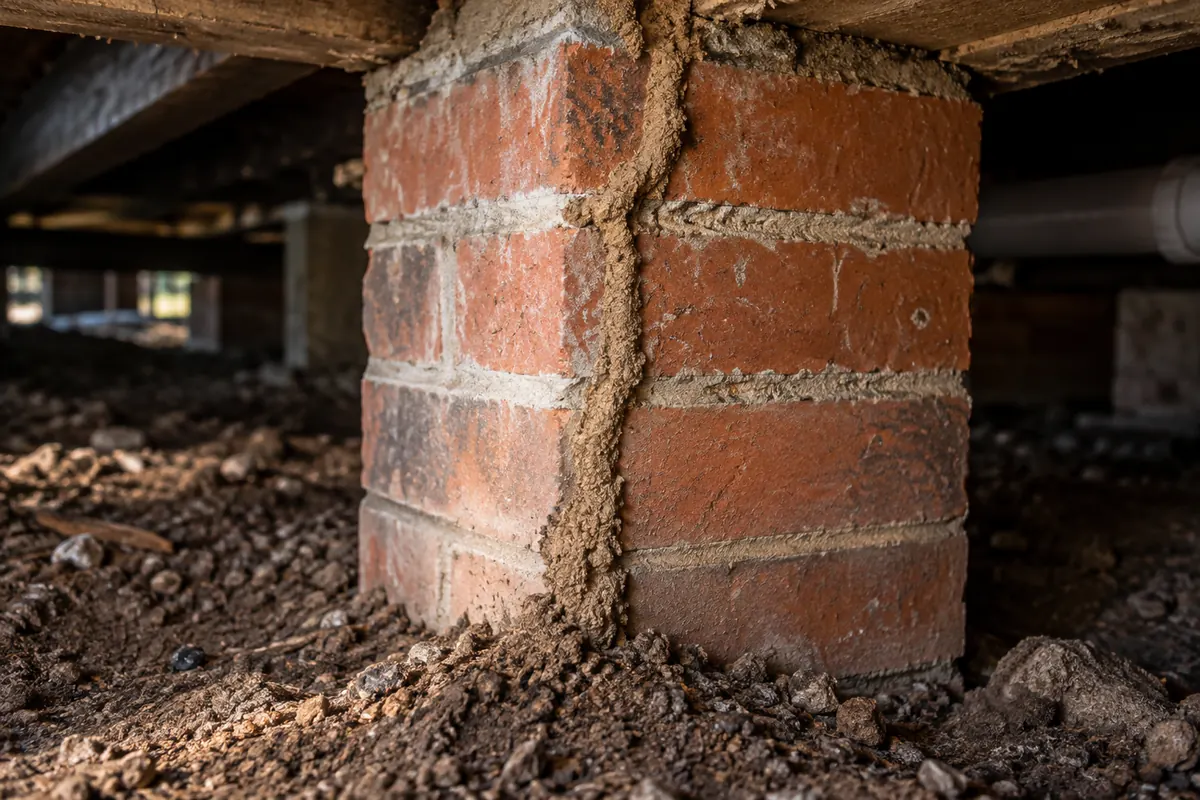
Termites dry out fast in open air, so they travel inside mud tubes they build from soil, saliva and droppings. These mud leads (also called shelter tubes) are about the width of a pencil and run up brick piers, stumps, slab edges, foundation walls and the back of cupboards.
Don't break it open to check. If termites are active inside, disturbing the lead can make them abandon it, and that's the spot I'd use to treat the colony. A dry, empty lead still tells you termites have been there. Also look for mud packed into cracks in plaster or gaps around skirting boards.
Hollow or soft timber
Termites eat timber from the inside and leave a thin outer skin. Tap skirting boards, door frames and window frames with the handle of a screwdriver. Healthy timber sounds solid. Termite damaged timber often sounds hollow or papery, and a firm press can push straight through.
What does termite damage look like?
Inside the timber you'll usually find tunnels running with the grain, packed with mud or soil. Paint may bubble or crack in a line along a skirting board, or the surface may look slightly wavy. Some drywood termites leave tiny, dry pellets (frass) instead of mud. The Queensland Government notes that drywood termites, including the introduced West Indian drywood termite, are found throughout Queensland and only need the moisture inside the timber.
A common scenario in Logan homes is a door near the bathroom or laundry that starts sticking. The owner planes the edge, and a few months later it sticks again. When the architrave finally comes off, the timber behind it has been eaten down to a thin shell with mud packed into the gaps. Wet areas are a favourite spot, because the framing around them tends to stay damp.
Doors and windows that stick
When termites eat into door jambs and window frames, the timber can sag and lose its shape, and the moisture they bring in can make it swell. Doors start to jam and windows get harder to open.
On its own, a sticking door is often just humidity or a house settling. It becomes a red flag when it shows up with other signs nearby, like bubbling paint, mud in gaps, or hollow sounding trim.
What do termites sound like?
Sometimes you can hear them. Soldiers bang their heads against the timber when disturbed, which can make a faint clicking inside a wall at night. A Termatrac scan picks up movement behind walls without cutting anything open, which is far more reliable than listening. I explain how it works on my Termatrac page.
Termite damage compared with rot
Rot and termite damage get mixed up a lot, and the fix for each is completely different.
| What you see | More likely termites | More likely rot |
|---|---|---|
| Inside the timber | Tunnels with the grain, packed with mud or soil | Soft, crumbly or stringy fibres, no tunnels |
| Surface | Thin, intact skin over hollow timber | Visible softening, cracking or fungal growth |
| Location | Anywhere, including dry areas | Usually where water sits or leaks |
| Smell | Earthy or no smell | Musty, damp smell |
Wet timber can also attract termites, so you can have both. If you're unsure, leave it alone and get it checked.
What to do if you find termites
- Don't disturb the area or break open any mud leads.
- Take photos of the damage, the mud leads and any insects you can see.
- Keep timber, garden beds and stored items off the slab edge so the area stays visible.
- Book a termite inspection as soon as you can.
When I inspect, I check the house inside and out, the roof void and subfloor where there's safe access, and the yard. Then I'll explain what I found, and you get a PDF report with photos by email. If treatment is needed, I'll walk you through how termite treatment works for your home before anything is done.
Why you should not spray them
It's tempting to grab a can of surface spray. Please don't. Spraying kills a handful of workers, and the rest of the colony abandons that lead and finds another way in. You lose the active spot I'd use to treat the colony.
How to kill termites properly
The target is the colony, not the termites you can see, and on a home with active termites that work needs to be planned around how the house is built. It's a job for a licensed technician.
When to book an inspection
Book straight away if you've found any of the signs above. Otherwise, Australian Standard AS 3660 recommends regular inspections at least every 12 months, and more often in high risk areas, which is also the QBCC's advice to homeowners. I've written more about timing in how often you should get a termite inspection.
You can book an inspection online or call me on 0412 205 586.
Summary: how do I know if I have termites?
- Look for mud leads on brickwork, piers, slab edges and inside cupboards.
- Tap timber trim. Hollow or papery sounds are a warning sign.
- Watch for doors and windows that suddenly stick, and paint that bubbles along skirting boards.
- Check windowsills for discarded wings after warm, humid evenings.
- If you find anything, don't spray or disturb it. Take photos and book an inspection.
So, how do I know if I have termites? Visual signs tell you when to worry. A professional inspection, with a radar scan behind the walls, tells you what's really going on.
Frequently asked questions
How can I tell if I have termites without seeing them?
Check for mud tubes on brick and slab edges, hollow sounding timber, bubbling paint along skirting boards, and discarded wings on windowsills. A Termatrac scan can pick up movement behind walls without drilling.
What do termites look like in Australia?
Workers are small, soft and creamy white to pale brown, with straight antennae and no pinched waist. Soldiers have a harder, darker head.
Are white ants the same as termites?
Yes. "White ants" is the common Australian name for termites. They aren't ants at all.
What does termite damage look like in timber?
It often looks fine on the outside but is hollow underneath, with mud packed tunnels along the grain. Pressing on the surface can push straight through.
Can I hear termites in my walls?
Sometimes, as a faint clicking in a quiet house. Plenty of active infestations make no noise you can hear, so silence doesn't mean you're clear.
What does a termite nest look like?
It varies by species. Some nest in trees or stumps, some underground, and some build visible mounds. The one attacking a house is usually hidden.
Should I spray termites if I find them?
No. Surface sprays kill only the termites they touch, and the colony usually moves to a new entry point. Leave it alone and call a licensed technician.
How long does a termite inspection take?
It depends on the size of the house, the yard and how easy the roof void and subfloor are to get into. I'll give you a rough idea when you book. You can call me on 0412 205 586 to talk it through.
What should I do while waiting for an inspection?
Leave the damaged area undisturbed and keep pets and kids away from broken timber. Fix any leaking taps or overflow pipes near the house, as termites are drawn to moisture.