
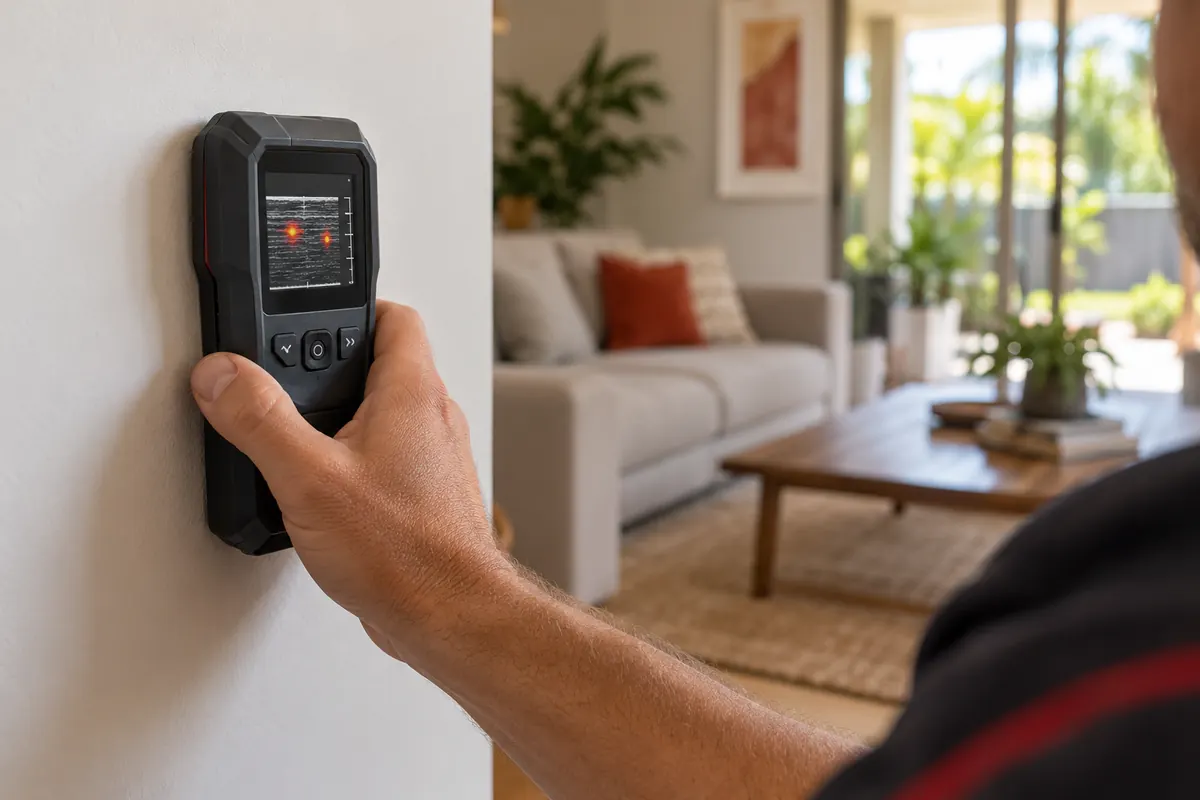
What the Termatrac iTraker does
The iTraker is Termatrac's current inspection unit. (You'll often see it written as iTracker, which is how most people search for it.) It combines a few sensors in one device:
- a radar motion sensor that detects activity behind surfaces
- moisture sensors that measure moisture changes below the surface
- a temperature sensor that shows small changes in surface temperature
None of these replace a careful visual inspection. They just let me look further than a torch can reach.
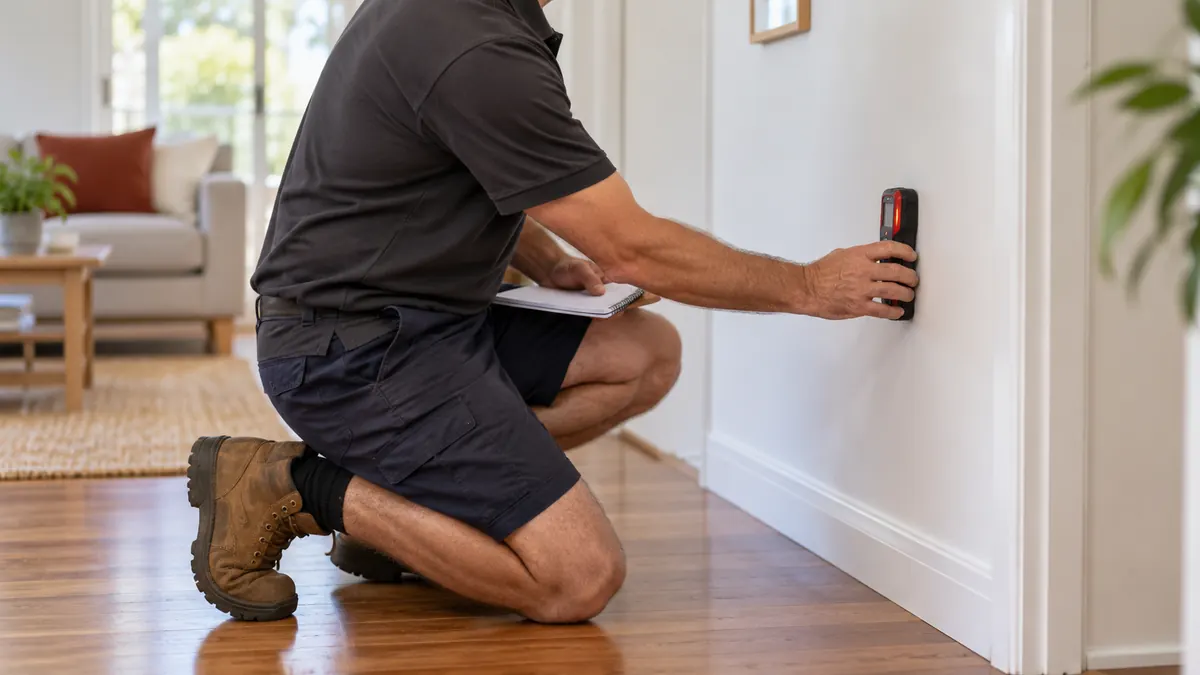
How radar finds termites behind walls
Radar termite detection works on movement. The unit sends out low-energy microwaves that pass through common building materials such as plasterboard, timber and some tiles. When termites are travelling or feeding in a wall cavity, their movement shows up as a reading on the screen.
It's sensitive, so I hold it steady against the surface while it reads. Then I use moisture and temperature readings to back up what the radar is showing, because termites bring moisture with them and an active nest can give off a little heat.
Moisture and heat as warning signs
Termites need moisture to survive, so a damp patch inside a wall where there shouldn't be one is worth a closer look. A leaking shower recess can create the conditions termites like before they even arrive, so it goes in your report as a risk to fix.
Where a thermal camera is used, a thermal imaging termite inspection looks for small temperature differences across a wall or ceiling. A warm spot can point to a nest or a busy section of workings. It's one more clue, and I treat it as that, not as proof by itself.
Termatrac compared with a visual-only check
A visual inspection is still the backbone of any termite inspection: mud leads, damaged timber, bubbling paint, frass and sagging frames. The limit is that you can only judge the surface.
| Visual-only check | Visual check plus Termatrac | |
|---|---|---|
| Sees inside wall cavities | No | Detects movement through the lining |
| Needs drilling or cutting | Sometimes, to confirm | No |
| Disturbs termites | Tapping and probing can | Readings are taken without breaking in |
| Confirms live activity | Only when workings are opened | Movement shows on screen |
The point about disturbing termites matters more than people expect. If a nest is broken into, termites often abandon that section and move elsewhere in the house. That makes them harder to find and harder to treat. A non invasive termite inspection keeps them where they are until treatment starts.
When I use it
The Termatrac comes with me on termite inspections, and I lean on it most in these spots:
- walls next to bathrooms, laundries and kitchens where moisture builds up
- spots where I've found mud leads or damage nearby
- areas I can't see into, like built-in wardrobes, enclosed stairs and lined-in subfloors
- door and window frames where paint is bubbling or timber sounds hollow
It's also handy after treatment, as a way to check whether activity has dropped off in an area that was active before.
What it means for your report
A Termatrac inspection is part of a full termite inspection, so the findings go into the same report. Where the radar shows movement, I'll note where it is and what else backed it up, such as moisture or visible workings. Where it shows nothing, that's useful too, because it supports a clear result for that wall or area.
I'll be honest about the limits as well. Radar detects movement, so termites that are quiet at the time of the inspection may not register. Metal and some very dense surfaces can block or weaken readings. That's why I combine it with a visual inspection and why AS 3660 recommends inspecting at least once every 12 months.
More on how I work and my 12 years in pest control is on my about page.
Frequently asked questions
What is Termatrac?
Termatrac is a brand of termite detection equipment. Its units use radar, moisture and temperature sensors to find signs of termites behind walls and ceilings without damaging the surface.
Does a Termatrac inspection damage my walls?
No. The unit is held against the surface and reads through it. There's no drilling, cutting or removing of linings.
Can Termatrac see through every surface?
It reads through most common building materials, like plasterboard and timber. Metal and some very dense or thick surfaces can block or weaken a reading, so in those areas I rely more on visual checks and moisture readings.
Is a Termatrac inspection more expensive than a normal termite inspection?
I don't publish prices. A termite inspection is quoted as a fixed price for your property before I start, based mostly on size and access, and I'll tell you what's included when you book.
Is radar termite detection 100% accurate?
No detection method is. Radar picks up movement, so termites that aren't active at that moment may not show. That's why I use it with a visual inspection and recommend regular checks.
How do I book a Termatrac inspection?
Call or text me on 0412 205 586, or book an inspection online. Mention that you'd like the radar used and I'll plan for it.
Book a Termatrac inspection
Want to know what's behind your walls without anyone cutting holes in them? Book a termite inspection with Termatrac radar. I service Logan, Brisbane's southside, the Redlands and Ipswich. Call or text 0412 205 586 or book your inspection online.